
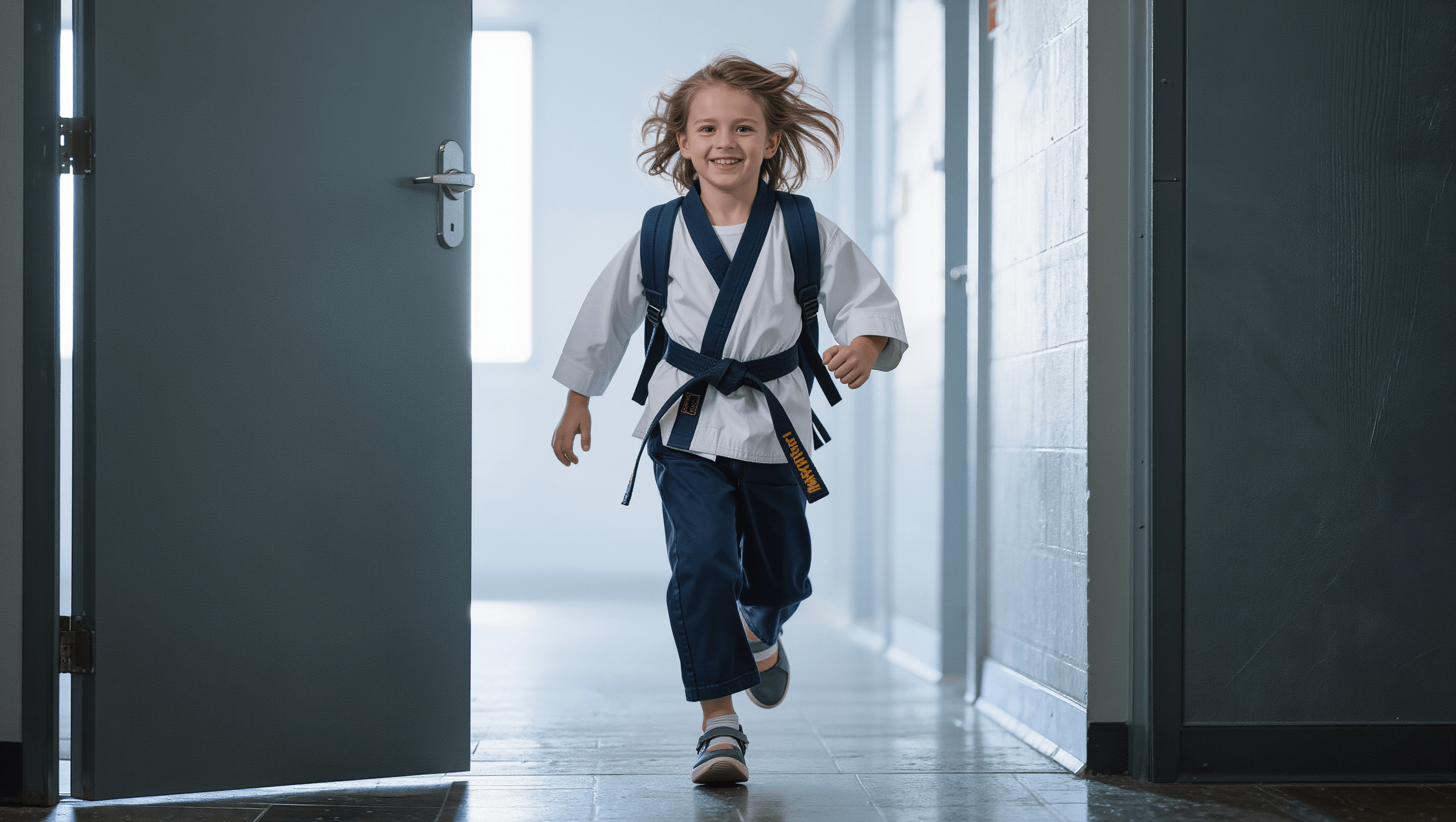
Nothing about his team changed. Same friends, same sport, same kid who used to walk off the field proud of himself even after a rough game. But something shifted the day he started at a new school, and now he’s harder on himself about everything — including things that have nothing to do with school at all.
Parents usually notice this before they can explain it. He’s more self-conscious. He second-guesses himself in front of people. He’s suddenly convinced he’s “bad” at things he used to just enjoy.
Here’s what’s actually going on: confidence isn’t attached to one activity. It’s attached to a kid’s sense of where he stands. Change the room — a new classroom, new faces, new social rules to figure out — and that unsteadiness follows him everywhere else, even onto a field full of people he’s known for years.
This isn’t about being bullied. It’s about being new.
A lot of parents jump straight to worrying about bullying when a kid’s confidence dips around a school change, and sometimes that’s part of it. But more often, it’s simpler and harder to spot: he’s spending all day reading a room he doesn’t know yet — where to sit, who to talk to, whether he’s doing this right — and there’s not much confidence left over by 3pm for anything else. That’s not a red flag. That’s just what adjusting looks like from the inside.
Confidence is a skill, not a feeling that shows up on its own.
The good news is that confidence is trainable, and it doesn’t have to come from the exact place that shook it. A kid doesn’t need to feel confident at his new school before he can feel confident somewhere else — actually, it usually works the other way around. Kids build a sense of “I can handle a new situation” in a space that’s a little separate from the one giving them trouble, and then they carry it back with them.
That’s a lot of what we’re actually doing on the mat. Every class puts a kid in front of new drills, new partners, new challenges he hasn’t mastered yet — in a room that’s built to make that safe. He learns to walk in, not know something yet, and stay in it anyway. That’s the exact muscle a new classroom requires. We just get to practice it somewhere the stakes feel smaller.
The wins are quiet, and that’s the point.
Belt tests are the loud, obvious progress — stripes, ceremonies, a new color around his waist. But the quiet win is the one that matters here: a kid who used to hang back now raising his hand to try first. A kid who used to need three reminders to introduce himself now doing it on his own, at school, without anyone telling him to. You may not see that moment happen. You’ll just notice, a few weeks in, that he seems more like himself again.
If your kid is in the middle of a “new” right now
Whatever the new is — a new school, a new grade, a new town — a class built around small, repeatable challenges in a supportive room can give him somewhere to rebuild that “I can handle this” feeling on his own terms. Come see it for yourself with 14 Days for $14 at our Overland Park or Lenexa location. You’re welcome to watch from the lobby the whole time — most parents do, at least for the first few classes.
He doesn’t have to have it all figured out yet. He just needs a place that’s patient while he does.
