
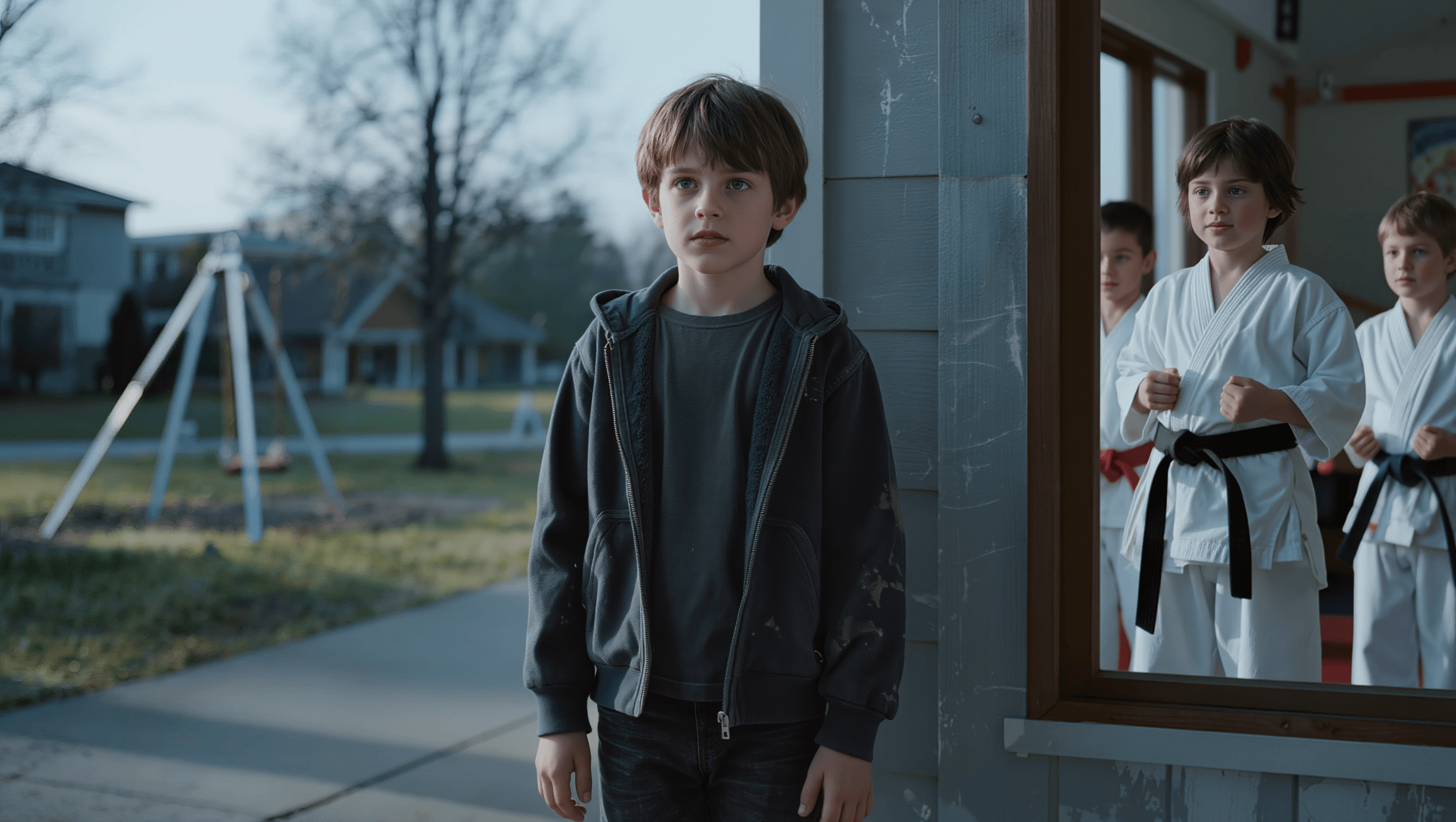
He Quit Soccer. Now He Wants to Quit Karate, Too. Here’s How to Tell If It’s a Phase.
He used to run to the car with his gear bag. Now he’s dragging his feet, telling you he’d rather just go to the park. You’ve heard this before — it’s basically what happened right before soccer ended.
So now you’re standing in the kitchen doing the math parents do: Is this a real “I’m done,” or is this a Tuesday-after-a-long-week kind of done? Do you push, or do you let it go?
Here’s the honest answer: it depends, and you’re allowed to take a minute to figure out which one it is.
First, separate “tired” from “done.”
Kids don’t always have the words for “I’m overwhelmed” or “I need a break,” so it comes out as “I want to quit.” Before you make any decision, it helps to ask a few quieter questions instead of the big one (“do you want to quit?”) — which is scary for a kid to answer honestly.
Try these instead:
- What’s your favorite part of class right now?
- Is there something happening in class that’s hard or frustrating?
- Would you rather skip today, or skip this whole thing?
A kid who’s just tired usually still lights up talking about one part of it — a favorite drill, a friend, a belt he’s working toward. A kid who’s genuinely done tends to go flat on the whole topic. That difference tells you a lot.
Second, notice the pattern.
One activity ending isn’t a pattern. Two in a row starts to look like one — but not necessarily the pattern you think. Sometimes it means a kid needs more unstructured time, and that’s a completely valid thing for a kid to need. Free play at the park matters. Nobody’s arguing that.
But sometimes two “quits” in a row means a kid hasn’t yet had the experience of pushing through a flat week and coming out the other side proud of himself. That’s a different skill than showing up when it’s fun — and it’s one of the biggest things martial arts is actually built to teach. Not through pressure. Through small, repeatable wins that are hard to notice from the outside and impossible for a kid to fake his way past.
Third, remember: rest and quitting aren’t the same decision.
You can shorten the ask without ending it. A kid who’s overloaded doesn’t need zero classes — he might need one class a week instead of three, a week off to reset, or a conversation with his instructor about what’s actually going on. At AmeriKick, our coaches notice when a student’s energy shifts, and they’d rather talk it through with your family than watch a kid quietly check out.
There’s no shame in either direction here. Some kids try karate and it’s genuinely not their thing, and that’s fine — better to know now than to force it for a year. Other kids are one good class away from remembering why they loved it in the first place. The only way to know which one you’re looking at is to get curious before you decide.
If you’re not sure, here’s a low-pressure way to find out.
You don’t have to commit to a full season to answer this question. Our 14 Days for $14 gives your family two real weeks in class — enough time to see whether this is a slump or a genuine “not for him,” without betting a whole session on it either way. Bring him in at Overland Park or Lenexa, let his coach get to know him, and you’ll usually have your answer faster than you’d expect.
He can still go to the park this weekend either way. This isn’t about choosing one or the other — it’s about giving him (and you) enough information to choose well.
